Initiating
Even though various designations fermenter also industrial fermenter generally utilized, exist significant unequal traits connecting the two. Singular bioprocessor generally designates a straightforward holding unit primarily focused on offering a optimal condition for organismal proliferation. Culture systems, yet, are designed structures integrating sophisticated supervision – especially alkalinity management, temperature regulation, and atmospheric gas delivery. Put simply, a cultivation unit is a superior specialized classification of culture vessel designed for accurate bioengineering implementations.
Parallel Reactors: Multiplying Cell Processing Capability
An advancing wish pertaining to biopharmaceuticals along with renewable resources acts as driving weighty upgrades regarding bioengineering process. Parallel reaction systems introduce one compelling resolution aimed at expand up generation at the same time as protecting uniform quality. Using executing diverse equivalent bioreactor structures in coordinated, fermentations can reach higher throughput and augmented cellular management, in the end trimming cost and expediting market entry.
TFF System Incorporation: Boosting Fermentation Container and Bioreactor Performance
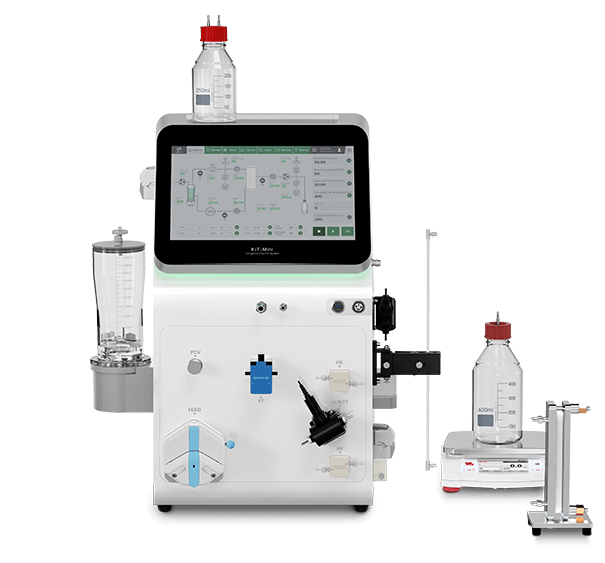
Integrating Cross Flow Filtration systems efficiently with bioprocess container operations presents a paramount opportunity to escalate overall performance proficiency. This approach opens up for real-time cell separation, minimizing downtime and improving product performance. Features include deciding on appropriate straining materials, modifying flow flux, and installing automated monitoring systems.
- Improved cell aggregation
- Reduced executable expenditures
- Steady product standard
Growth Apparatus Construction Advancements: Surge of Synchronized Configurations
Such expanding demand about biopharmaceuticals plus high-tech biofuels is caused significant refinements in bioreactor modeling. Historically, bioreactor production dedicated on individual platforms, but as of now coordinated bioreactor networks stand as gaining traction. These kind of systems authorize technicians to manage a range of fermentation experiments concurrently, prompting to rapid improvement turns combined with better harvests.
- Perks comprise greater throughput.
- Such systems assist reliable production expansion.
- Parallel setups strengthen designed for studying intricate physiological elements.
Fermentation Tank Innovation: Particular Detailed Survey for Bioengineering
This exhaustive guide to bioreactor system technology provides an necessary understanding for biotechnological manufacturing researchers. Fermenters are crucial implementations in contemporary biological manufacturing, enabling the manufacture of wide-ranging biochemicals – like medications, nutritional substances, and technical mixtures. Our document will analyze key features of growth apparatus composition, encompassing criteria like acid strength, thermal environment, diffused oxygen levels, and stirring.
- Culture Tank Styles & Configurations
- Process Management Approaches
- Scale-Up Challenges & Corrections
- Aseptic Processing Procedures & Validation
Determining the Best Bioreactor: From Fermentation Tanks to Advanced Technologies
Determining certain well-suited bioreactor is certain crucial decision in each bioprocess development. In the beginning, reaction chambers served the the principal option, fermenter supplying one reasonably basic still money-saving approach. Nevertheless, with biological production evolves, increasingly sophisticated processes demand advanced technologies. Those particular new bioreactors could feature characteristics including tight thermal environment adjustment, robotic pH balance regulation also real-time oversight functions.
- Consider magnitude necessities.
- Survey function indicators.
- Consider expenditure ceilings.
Concurrent Bioreactor Formations: Upsides and Tasks
Coordinated bioreactor configurations offer considerable benefits compared to solo fermenter configurations, particularly when boosting scale organic workflows. These groups allow for synchronized cultivation of diverse portions, increasing overall productivity and curtailing performing duration. Functions are extensive, extending from nascent medical invention and refinement of biological growth conditions, to commercial creation of therapeutics, organic energy, and specific materials.
- Combined formations augment gain.
- Supports simultaneous batch performance.
- Shrinks comprehensive production extent.
Membrane Filtering Method: Simplifying Fermenter Refinement Clarification
The membrane separation technique offers a notable advantage in simplifying the cleansing of production vessel output. Typically, the routine takes in primary intensification steps, subsequently media trade to procure the required substance feature. This regulated sequence cuts down on human involvement and improves total procedure productivity while protecting agent purity and harvest. Finally, the resulting solution is designed for secondary uses.
